The private brand of Metro, Selection, positions themselves as products that are sold at a lower price and that can be compared to national brands due to their similarity in terms of packaging and quality. For instance, take a look at the figures provided below where two products are similar, however only the brand and the price are differentiated:
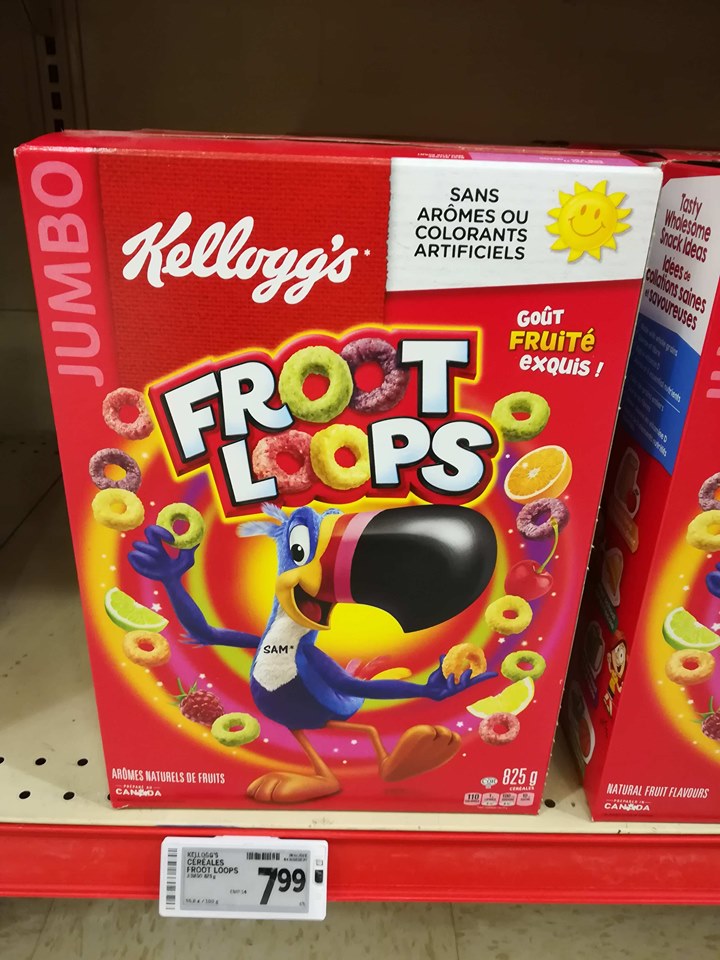
Figure 1: Kellogg’s Froot Loops at $7.99 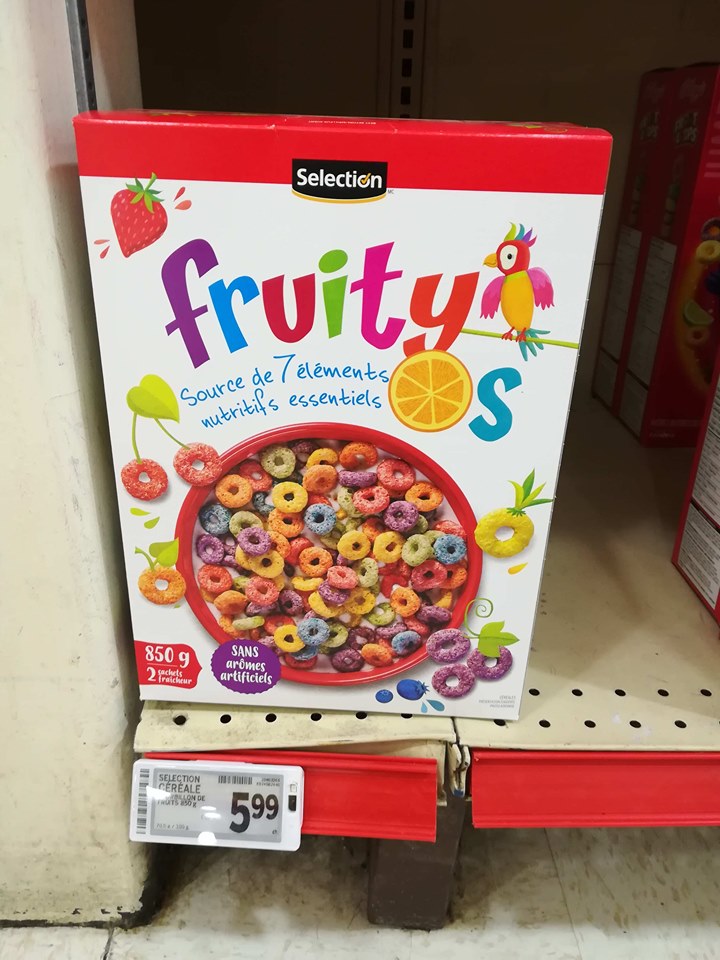
Figure 2: Selection’s Fruity at $5.99
Based on the pictures above, Figure 1 is the national brand and Figure 2 is the private brand. In fact, national brands are defined as established, successful and well-known brands selling in multiple stores whereas private brands, also known as store brands, compete with national brands by having look-alike packaging at a lower price to increase sales from consumers. In a typical retail store, consumers would be exposed to both varieties of brand. In fact, referring to the pictures above, the pictures were taken at the same store where both products were positioned next to each other. In addition, it is possible to see that the prices have quite a huge gap of $2 because of the brand. Also, Selection’s Fruity has 25 grams more in quantity and is still sold less expensive than Kellogg’s Froot Loops.
Higher quality or lower price?
The dilemma that consumers face during shopping is to choose between private brands and national brands. Most of the time, two of the elements that are considered on the firsthand basis are price and quality. Private brands are known for having lower prices but are also seen as having lower quality than national brands. This difficulty of making a purchase decision can be explained with the approach-approach conflict that consumers are facing.
Motivational conflicts occur when consumers must make a decision based on conflicting goals with reinforcements that can either be positive or negative. Furthermore, they are separated into three types: (1) approach-approach, (2) approach-avoidance, and (3) avoidance-avoidance in which approach is expressed as positive reinforcement and avoidance, negative reinforcement. All three motivational conflicts happen during the phase of evaluation of alternatives and consequently influence consumer’s purchase decision.
Firstly, approach-approach is a type of motivational conflict when both alternatives are desirable for the consumer. In order to incite consumers to buy one of the alternatives when consumers experience this conflict, marketers need to convince consumers that the choice they made is superior. Moreover, approach-avoidance is when one choice is desirable but also must be avoided due to negative feelings after purchase. Finally, avoidance-avoidance is when a consumer is presented with two undesirable choices.
In our case, private brands in retail stores are trying to influence the consumer by attracting them with lower prices. However, national brands also draw attention due to their strong brand image. In fact, when a brand is painted as positive and strong, consumers usually associate them as quality assurance leading them to buy national brands even at a higher price. Based on syndicated sources, it is noted that the growth of private labels is at 4.1% compared to national brands at an increase of only 1.4%.¹
It is also stated that 95% of shoppers will most likely purchase the same or more store labels’ products in the future years.¹
This reveals that consumers buy private labels’ products due to the fact that they do not have brand preference. In other words, this consumer behavior can be explained by brand parity in which they do not recognize any differences between the brands and opt for a less expensive alternative.
Competing with private brands is not easy
National brands compare meeting private brands as the same as meeting a competitor of the same market.²
As mentioned above, national brands are under pressure as they are losing to private brands due to their growth of about three times more with strong possibility of great sustainability in the long run. Therefore, national brands must start focusing on retaining loyal consumers and attracting the ones who are experiencing brand parity. For loyal consumers, they are always willing to purchase national brand products at any price due to affect referral in which they choose a brand solely because they like the brand. However, a survey conducted in 2019 shows that only 26% of consumers believe that name brands are worth their extra price.³ This is highly concerning for national brands as only one third of consumers have shown their willingness to pay for more.
In conclusion, competing with private brands is not easy as they are growing at a faster rate with the assurance of great sustainability in the future. In order to overcome this, national brands should focus on reaching consumers who tend to buy store brands’ goods due to their low prices, and emphasize and convince them that only national brands have the ability to produce superior quality products. In addition, they must take into consideration current marketing trends such as brand parity. Therefore, to build strong brand equity, they should change consumers’ perceptions towards national brands by highlighting its uniqueness that private brands do not possess. Communicating with your customers is key to brand loyalty as this will create a deeper bond between the company and the consumer and consequently increase brand equity.
[1] Cadent Consulting Group (2018). The Branding of Private Label. Retrieved from http://cadentcg.com/wp-content/uploads/The-Branding-of-Private-Label.pdf
[2] Quelch, J. & Harding, D. (2014, August 1). Brands Versus Private Labels: Fighting to Win. Harvard Business Review. Retrieved from https://hbr.org/1996/01/brands-versus-private-labels-fighting-to-win
[3] CPG, FMCG & RETAIL (2019, August 2). THE RISE OF PREMIUM PRIVATE LABEL AND ITS IMPACT ON DISCOUNT RETAILERS. Nielsen. Retrieved from https://www.nielsen.com/us/en/insights/article/2019/the-rise-of-premium-private-label-and-its-impact-on-discount-retailers/
 Private brands vs. National brands